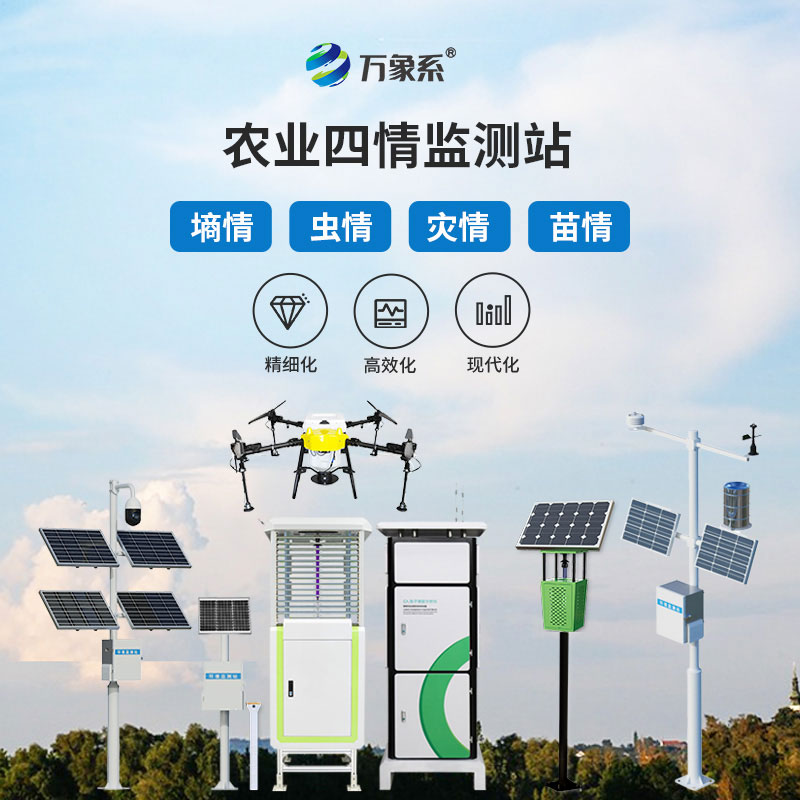
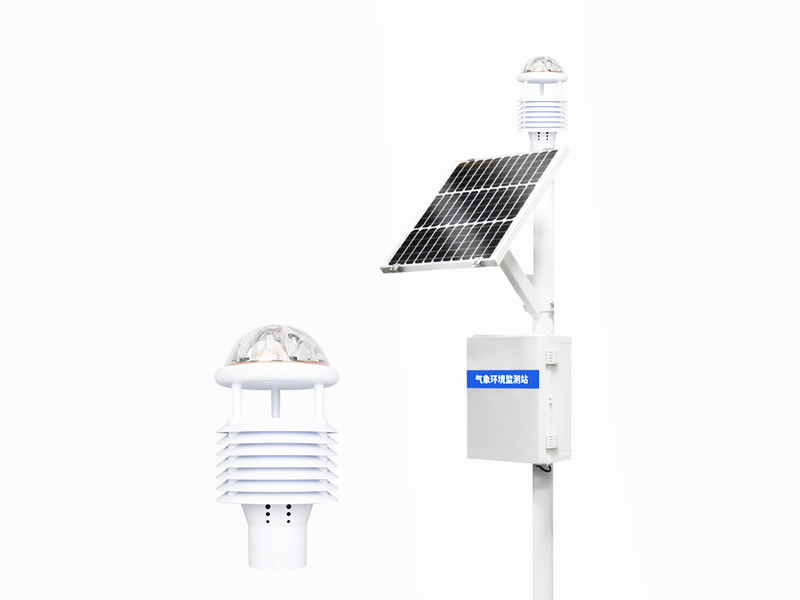
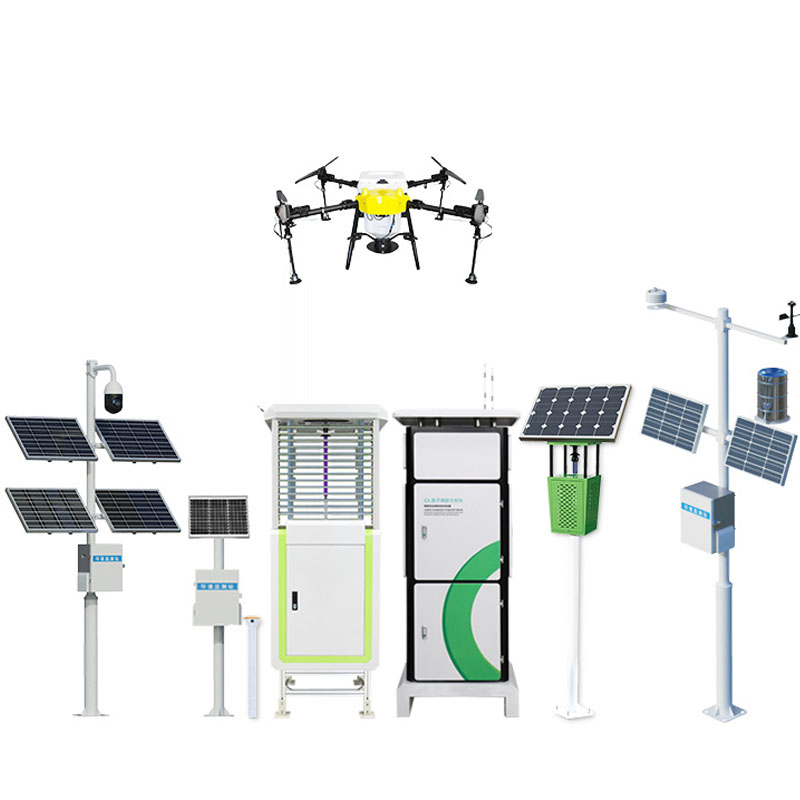
Traditional agricultural planting has long relied on farmers' experience for judgment. Field management mostly depends on intuition and weather The four core field conditions—soil moisture, crop growth, pest infestation, and meteorological disasters—have always been difficult to manage in a normalized and refined manner. Previous farmland management models obvious shortcomings: manual field inspections were time-consuming and labor-intensive, making it difficult to achieve full coverage of large-scale farmland. The discovery of field hazards was often delayed, problems typically only noticed when crops withered, pests broke out, or droughts and floods occurred. This not only increased the cost of remedial planting but also led to reduced crop yields and quality. With the comprehensive advancement of smart agriculture and high-standard farmland construction, the WX-Q3 IoT Agricultural Four-Condition Monitoring System has become a core supporting facility for the and upgrading of modern agriculture. By integrating all-around monitoring capabilities for soil moisture, crop growth, pest infestation, and disaster conditions, and relying on IoT and big data technologies, achieves 24/7 automatic monitoring, intelligent early warning, and scientific analysis of farmland status. This completely changes the traditional extensive planting management model, helping agricultural production shift from "lying on experience" to "relying on data."
Soil moisture monitoring is the foundation of scientific planting and the key to saving water and fertilizer while improving quality and increasing yield Soil moisture and the soil environment directly determine the growth status of crop roots. Traditional irrigation and fertilization rely entirely on farmers' experience, resulting in either excessive watering that causes water and fertilizer, soil waterlogging, and compaction, or insufficient watering that leads to crop drought and withering. Blind fertilization also causes soil pollution and nutrient imbalance. The WX-Q3 IoT Four-Condition Monitoring System can capture the dynamics of the field soil environment in real-time, continuously recording soil moisture status and environmental changes without the need for repeated manual field surveys. Planting can rely on real field data to precisely control the timing and amount of irrigation and fertilization, carrying out field management work as needed. This effectively saves water resources, reduces the abuse chemical fertilizers, and avoids resource waste and soil damage, while providing a suitable soil environment for crop growth. It ensures balanced crop growth from the basic stage, laying a solid foundation for production and increased income.
Crop growth monitoring enables full-process visual management of crop growth, solving the industry pain point of uneven growth control in large fields. In large-scale farmland, there are obvious differences in crop growth across different plots and areas. Manual inspections can only see the overall surface status and cannot accurately grasp hidden problems such as weak seedlings, stunted, and lagging growth in specific areas. If subtle growth problems are not timely intervened, they will gradually expand in the later stages, causing uneven field growth and seriously affecting overall yield. The W-Q3 IoT Agricultural Four-Condition Monitoring System relies on intelligent visual monitoring technology to collect real-time images of crop growth in the field 24/7, dynamically tracking changes seedling conditions. Managers can remotely view the growth status of the entire farmland without leaving their homes. For areas with weak growth or abnormal growth, targeted fertilization, watering, and management plan adjustments can made in a timely manner, achieving differentiated policies and precise management. This eliminates the polarization of field growth and ensures the balanced growth of crops across the entire farmland。
Pest monitoring establishes a proactive pest and disease control system, significantly reducing pesticide overuse and the risk of yield loss due to. Crop pests and diseases are characterized by their hidden nature, sudden occurrence, and strong dispersibility. Traditional pest control modes are mostly reactive, with farmers spraying pesticides over large areas only discovering the pests. This not only misses the optimal control window and makes management more difficult after dispersal, but also leads to excessive pesticide use and excessive pesticide residues in agricultural products, affecting quality and green planting standards. The WX-Q3 IoT Agricultural Four-Condition Monitoring System can continuously monitor field pest dynamics, capture early signals of pest breeding and aggregation, and early warning alerts during the small-scale emergence stage of pests. Growers can take preventive measures in advance, implement precise and targeted control, and avoid blind large-scale pesticide spraying This effectively curbs the spread of pests and diseases, reduces yield losses caused by them, practices the concept of green ecological planting, and enhances the quality and market competitiveness of agricultural products.Disaster monitoring builds a solid safety barrier for farmland, effectively resisting the impact of extreme weather and field disasters. Agricultural production is highly susceptible to the natural environment. Extreme weather such as, floods, strong winds, and frost, as well as various field disasters like waterlogging and soil salinization, can cause devastating damage to crops. Traditional agriculture lacks early warning, and can only respond passively to sudden disasters. Post-disaster remediation is not only costly but also makes it difficult to recover yield losses. The WX-Q3 IoT Four-Condition Monitoring System can monitor field meteorological and environmental changes in real-time, intelligently assess various disaster risks, and push early warning information before extreme weather and field disasters arrive Managers can make disaster prevention and mitigation preparations in advance, timely carry out protective measures such as drainage, insulation, reinforcement, and covering, minimize the damage of natural disasters to crops, effectively planting risks brought by sudden disasters, and ensure the stable and orderly progress of agricultural production.
Article address:
http://www.qxhjjc.com/en/newcen/1880.html





 Home
Home phone
phone Product Overview
 Contact Us