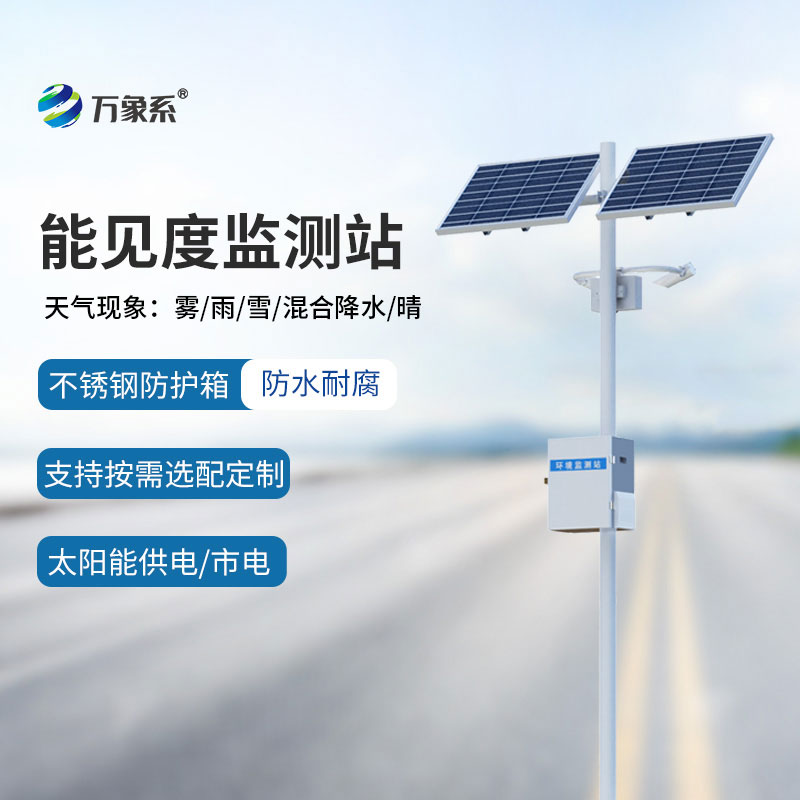
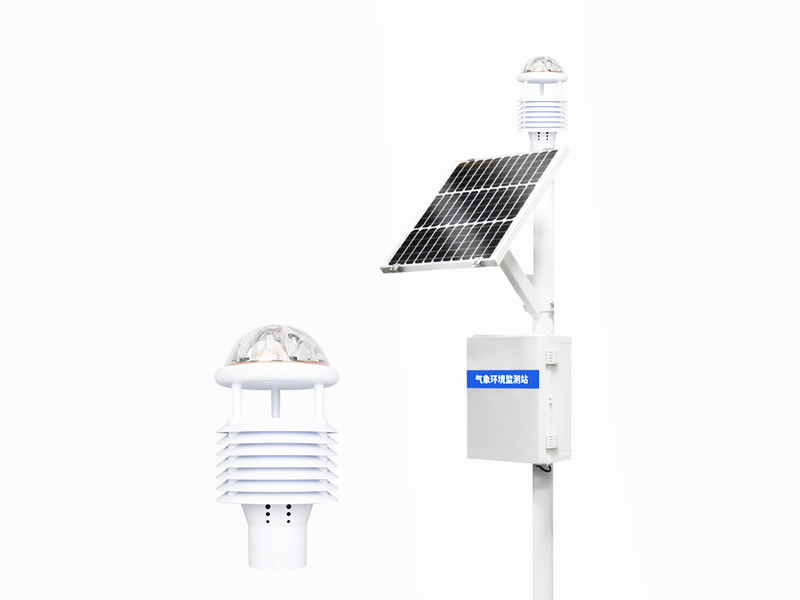
In numerous fields such as transportation, meteorological monitoring, scenic area operation and maintenance, and urban management, atmospheric visibility a core meteorological factor affecting safe operations. Weather phenomena like heavy fog, haze, sandstorms, rain and snow, and patch fog can rapidly reduce air transparency, causing sudden drop in visibility. This easily triggers a series of problems including road traffic accidents, flight delays, scenic area closures, and increased risks for outdoor operations. Traditional monitoring mostly relies on manual visual observation and regional meteorological broadcasts, which suffer from data lag, strong subjectivity, and insufficient accuracy, making it difficult to capture sudden local visibility changes a timely manner. The WX-NJD50 visibility monitoring and early warning system achieves all-weather automatic monitoring, intelligent analysis, and early warning of visibility, providing reliable data support for the safe operation and maintenance of various industries.
Ordinary meteorological equipment can only monitor conventional temperature, humidity, wind speed, and wind data, and cannot accurately perceive changes in air transparency, resulting in significant monitoring blind spots. The WX-NJD50 visibility monitoring and early warning system is designed to create an intelligent monitoring system for atmospheric visibility changes. It requires no manual on-site observation and can capture subtle fluctuations in air turbidity and visibility distance in real time identifying severe low-visibility weather at the earliest moment, truly achieving early detection, early warning, and early response to risks.
The greatest core advantage of the W-NJD50 visibility monitoring and early warning system is the realization of unmanned, all-weather, and continuous dynamic monitoring, completely breaking free from the time space limitations of manual monitoring. The entire system operates fully automatically, unaffected by the day-night cycle or rain, snow, and sandstorm weather, and can continuously the patterns of environmental visibility changes while updating monitoring data in real time. The system possesses intelligent recognition capabilities, accurately distinguishing visibility states under different scenarios such as normal weather light haze, thick fog, and sandstorms, effectively avoiding external environmental interference and preventing invalid or missed warnings. Relevant management departments can view the real-time visibility status various areas through the backend, clearly grasping the weather change trends in the region.
Article address:
http://www.qxhjjc.com/en/newcen/1911.html







 Home
Home phone
phone Product Overview
 Contact Us