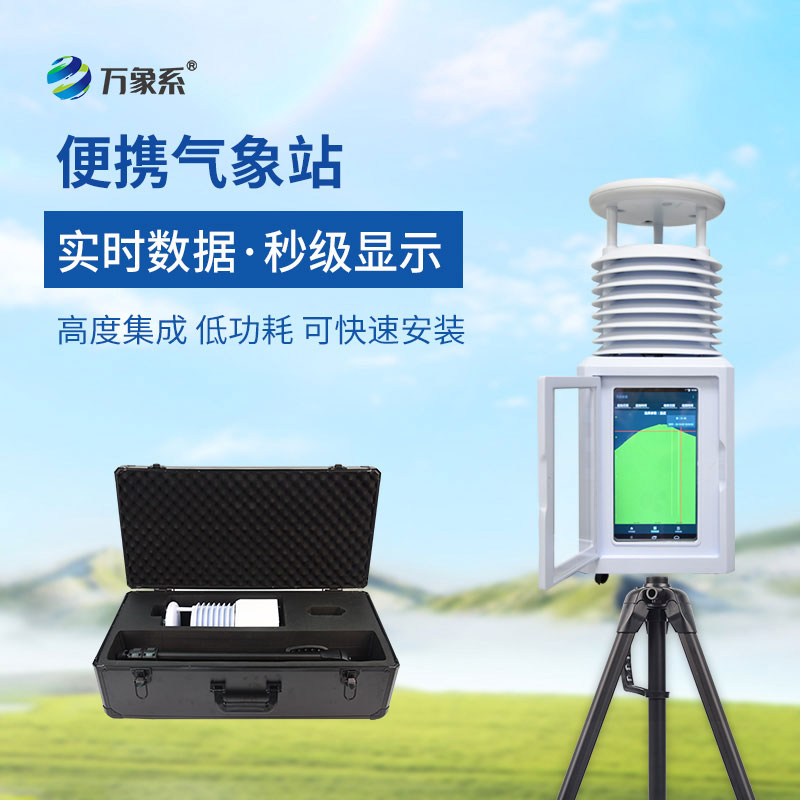
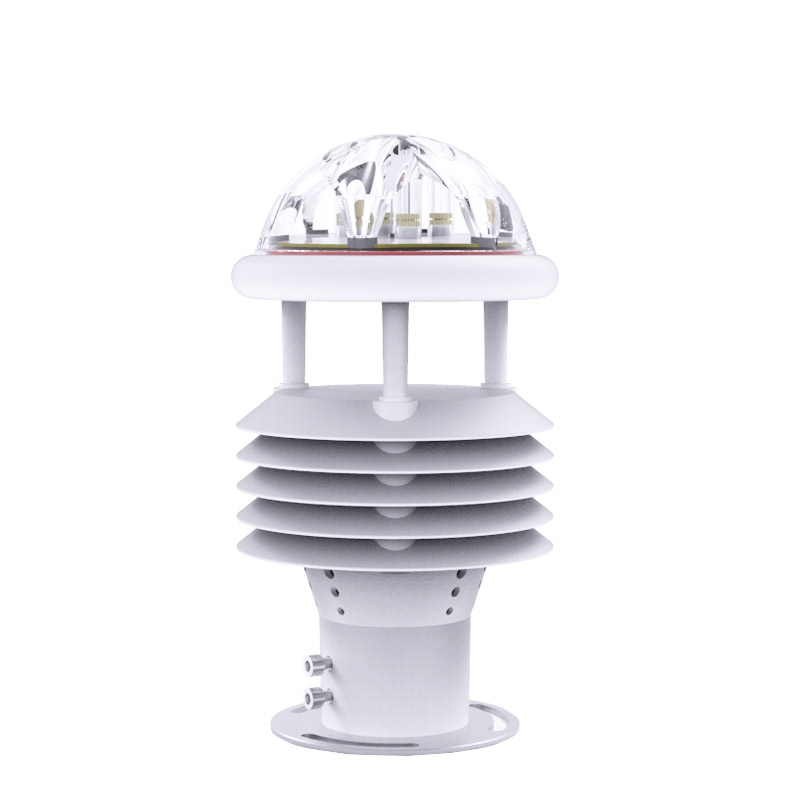
In emergency scenarios such as earthquake rescue, flood control, and forest firefighting, real-time and precise meteorological information affects the safety and efficiency of rescue operations. Traditional meteorological monitoring equipment struggles to meet the mobility and urgency requirements of emergency situations. The emergence of the WX-PQX2 emergency portable meteorological station has allowed meteorological monitoring to break free from the constraints of fixed sites and complex operations, enabling rapid deployment and immediate monitoring, and providing reliable meteorological for various emergency response tasks.
The core advantage of the WX-PQX12 emergency portable meteorological station lies in the perfect combination of "portability" "rapid deployment." It is compact in size and lightweight, making it easy to store and carry, and adaptable to various mobile methods such as hiking and vehicle transportation in rescue. Upon arrival at the scene, there is no need for a complicated installation and debugging process. One person can complete the deployment and start monitoring within a short period of time completely breaking the limitations of traditional meteorological equipment in emergency scenarios.
This allows meteorological monitoring to quickly keep up with the pace of rescue.
The emergency portable meteorological station excellent environmental adaptability and can handle various harsh emergency environments. Whether it is scorching heat, severe cold, or extreme weather such as heavy rain and sandstorms, it operate stably and continuously perform its monitoring function.
At the same time, it has extremely low requirements for terrain, and can be deployed and used normally in complex terrain such as mountains valleys, and forests during rescue operations, ensuring that meteorological monitoring is not restricted by environmental conditions.
The application of emergency portable meteorological stations has promoted the transformation of response work from experiential judgment to scientific decision-making. It compensates for the shortcomings of traditional emergency meteorological monitoring, allowing meteorological information to serve the rescue site accurately timely. This not only improves the safety and efficiency of rescue operations but also helps rescue personnel avoid secondary risks caused by meteorological disasters in advance. As an important auxiliary tool in emergency, it has built a meteorological protection barrier for the safety of rescue personnel and the effectiveness of emergency response.
Article address:
http://www.qxhjjc.com/en/newcen/1815.html








 Home
Home phone
phone Product Overview
 Contact Us