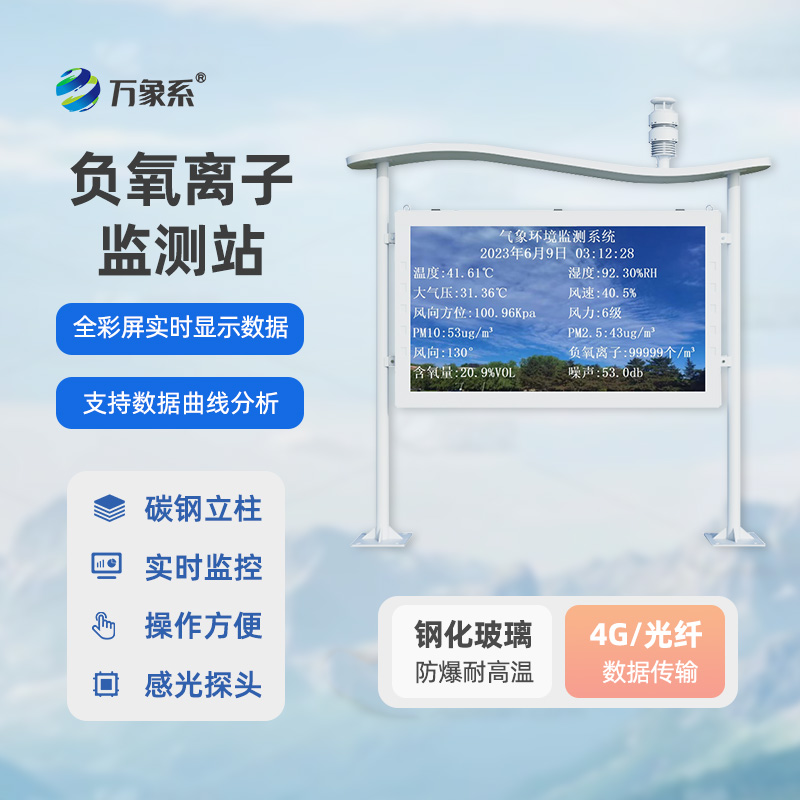
As an urban ecological barrier and a core venue for citizens' health and leisure, forest parks rely dense trees and mountain spring water systems to form a high-quality air environment. Negative air ions are a unique air nutrient of forests, and also the core standard for evaluating the ecological and health value of forest areas. In past forest park operation and maintenance, cultural tourism promotion, and ecological inspection work, staff could only rely on the growth of trees and the appearance water bodies to visually judge the ecological quality of the forest area. The promotion of high-quality air and natural oxygen bars to the public relied entirely on oral descriptions, without any evidence to support it. At the same time, the negative air ion content varies greatly across different areas of the forest, at different times of the day, and after rain or snow Manual inspections cannot monitor air changes around the clock, making it impossible to trace the effectiveness of ecological restoration and the air quality of the forest area. Both scenic area operation and forestry management are blind. The implementation and use of the WX-FZ5 Forest Park Negative Air Ion Monitoring Station completely fills the gap in the normalized monitoring of forest air.
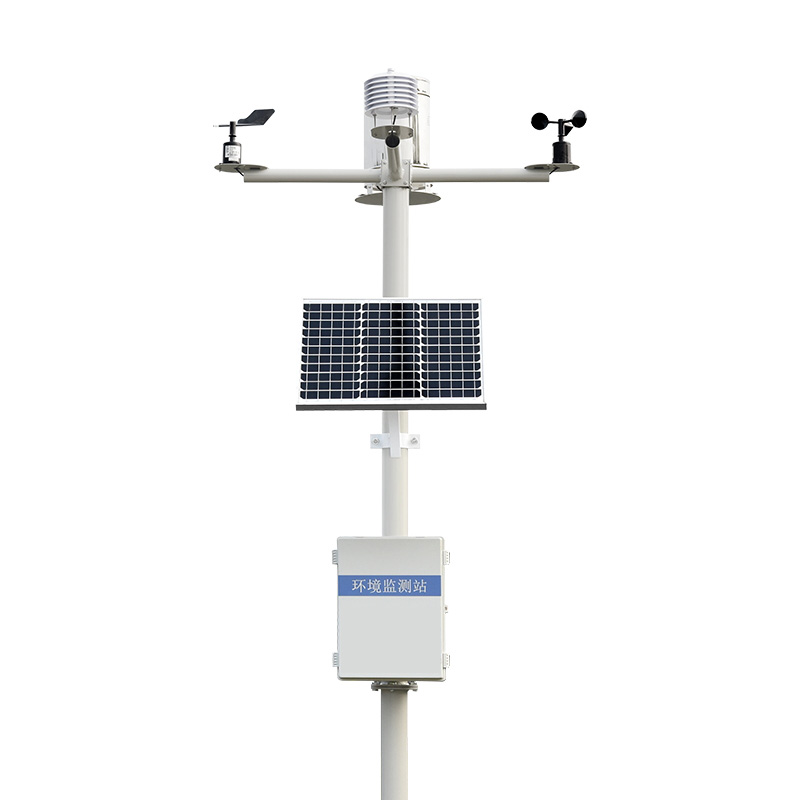
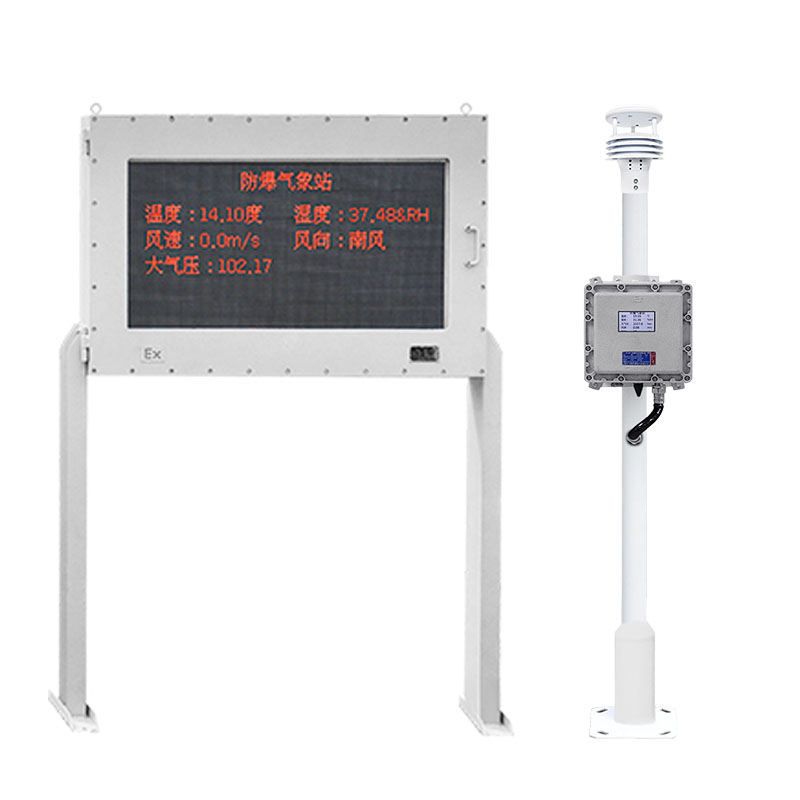
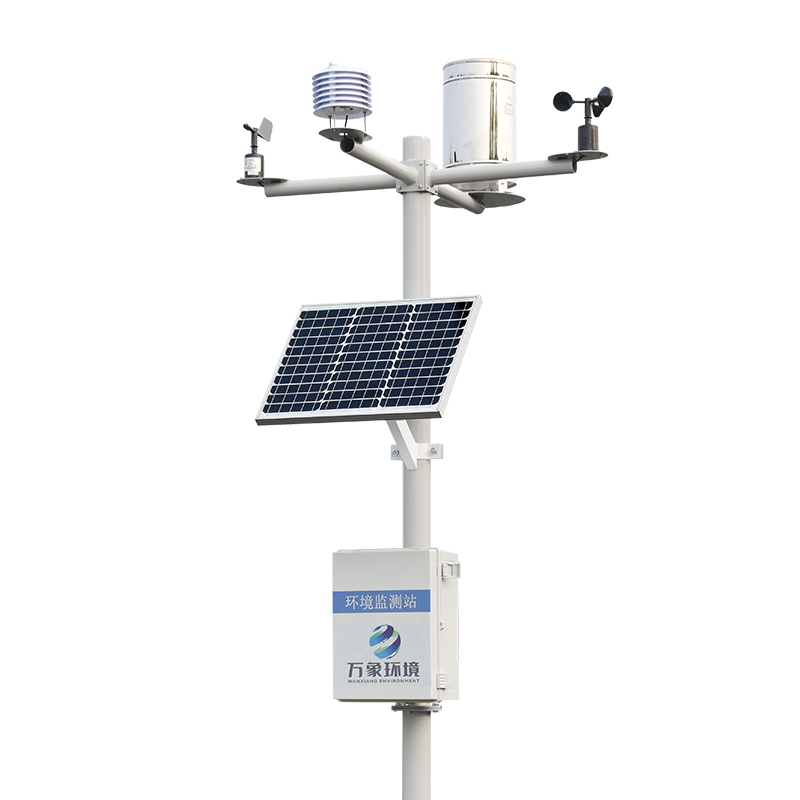
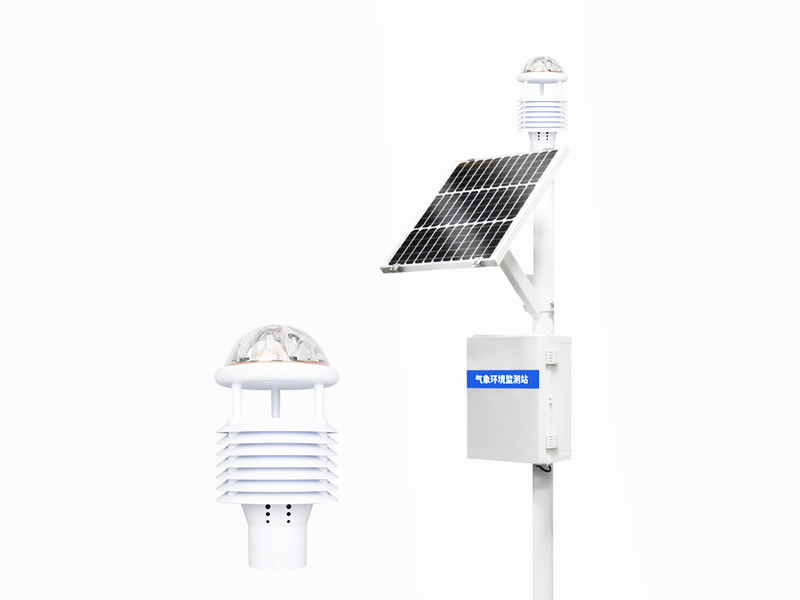
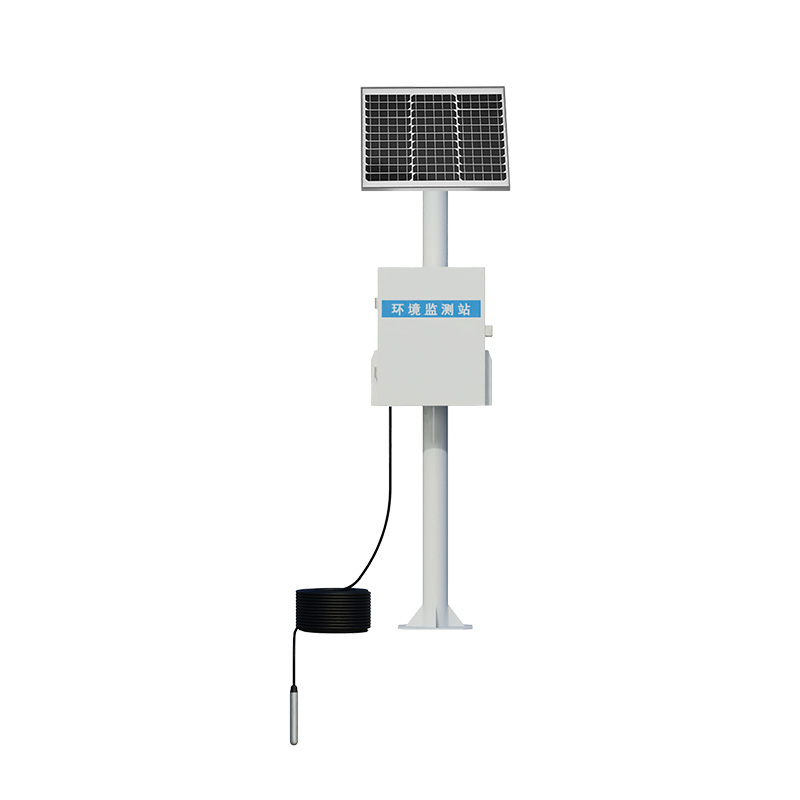
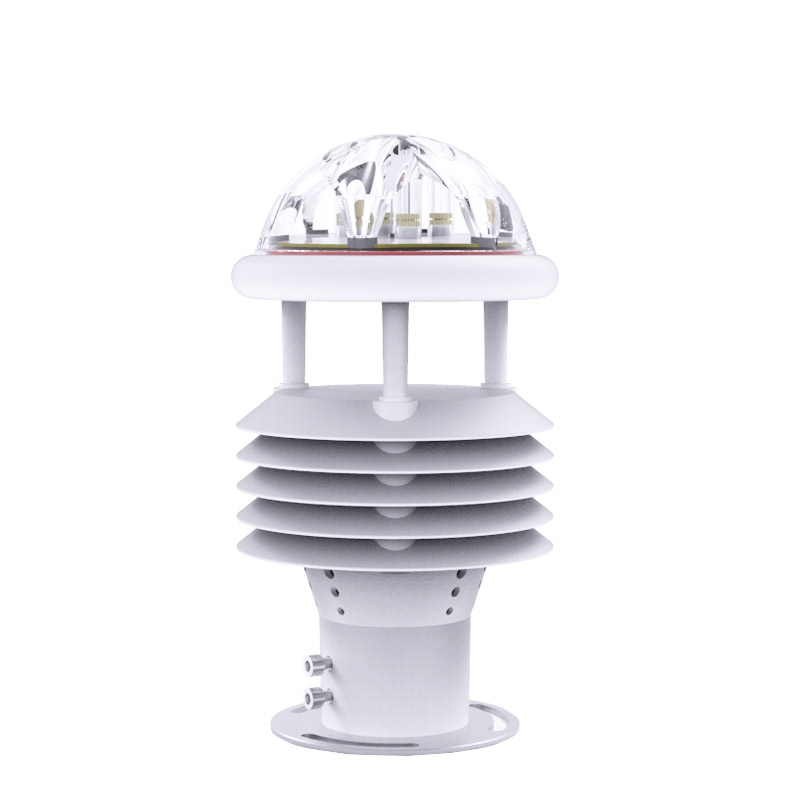
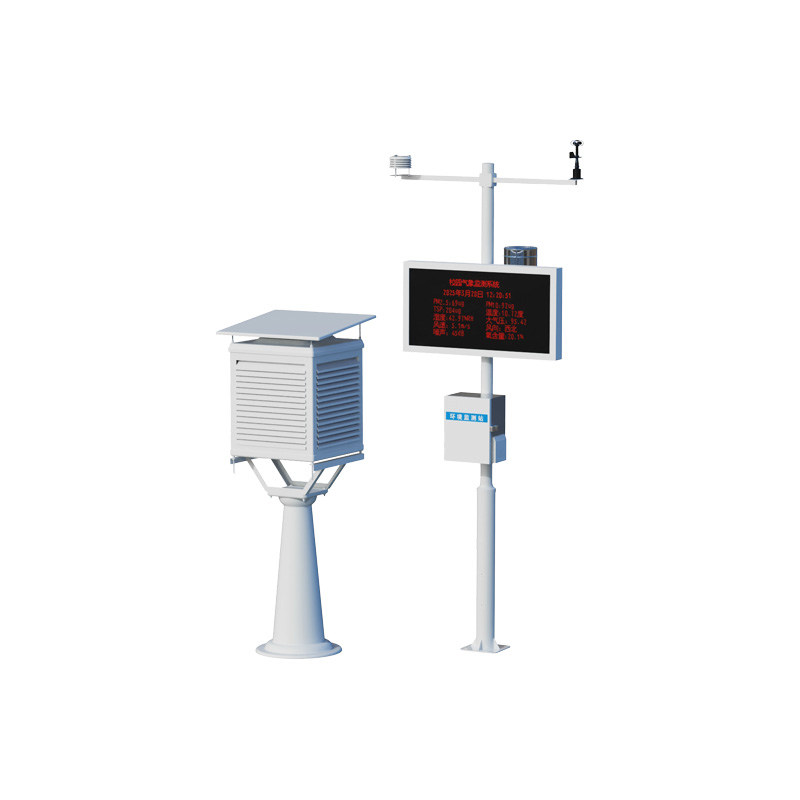
The W-FZ5 Forest Park Negative Air Ion Monitoring Station is specially designed for mountain and wild ecological scenarios, adapting to the original forest environment that is open-air, rainy and humid, large day-night temperature differences, and dense vegetation. It requires no manual on-site attendance, achieving autonomous around-the-clock monitoring of forest air. The equipment fits the operation and maintenance needs of forest parks, adapting to deployment in all areas including mountaintop forests, stream banks, leisure trails, and ecological conservation areas. It adapts to complex climates such as mountain wind, frost, rain, and plum rain, operating stably for a long time without interference from the natural forest environment. It eliminates the need for frequent manual debugging on-site sampling, getting rid of the problems of slow manual inspection timeliness, incomplete coverage, and fragmented data. It automatically captures the air ecological changes across the entire area, restores true air quality of the forest park, and builds a comprehensive, long-term, and uninterrupted forest air monitoring network.
For forestry ecological management work, the WX-FZ Forest Park Negative Air Ion Monitoring Station provides scientific references for forest vegetation maintenance, ecological restoration, and forest land planning, helping long-term forest conservation. Tree growth, water system, and vegetation coverage all directly affect the production of negative air ions. The monitoring station stores air change data over the long term, allowing managers to judge the ecological health of the forest by comparing the data. If the negative ion values in an area continue to decline, potential hazards such as vegetation degradation, surrounding dust, and water system pollution can be investigated in time and targeted tree replanting, ecological water supplementation, and regional environmental remediation work can be carried out. At the same time, relying on air data from previous years, the effectiveness of farmland to forest, forest land restoration, and ecological transformation work can be reviewed. This allows forest conservation and forest land operation and maintenance to move away from experience-based management, real ecological data to optimize management plans and protect the original ecological system of the forest park.
At the level of scenic area cultural tourism operation and tourist services, the forest park negative ion monitoring station activates ecological resources and creates a differentiated health and cultural tourism advantage. Nowadays, the public increasingly prefers original ecological and highly health-promoting forest scenic areas. Tourists pay special to air comfort and health value. The monitoring station can simultaneously publicize real-time air data, making the invisible high-quality air visible. When tourists visit, they can intuitively the air status of the area, and preferentially choose areas with high negative air ions for walking, morning exercise, and health and leisure, enhancing the park visiting experience. Relying real monitoring data, the scenic area can create natural oxygen bar and ecological health and cultural tourism labels, distinguishing itself from ordinary urban parks, enriching promotional materials, and enhancing the visibility of scenic area.
Article address:
http://www.qxhjjc.com/en/newcen/1877.html








 Home
Home phone
phone Product Overview
 Contact Us