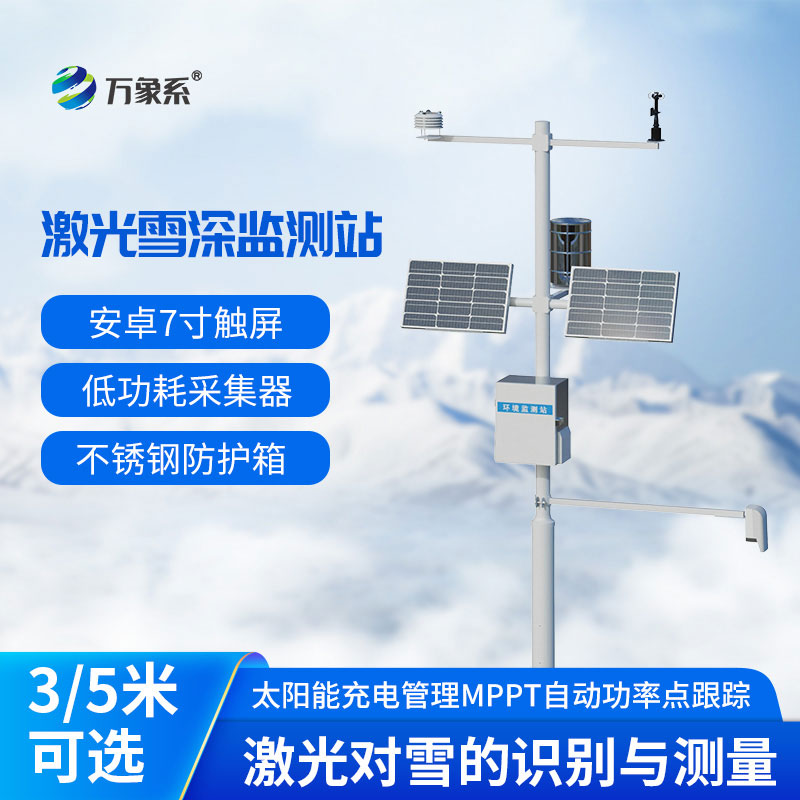
In the field of snow monitoring and disaster prevention and reduction, the emergence of the WX-XS3 laser depth monitoring system has broken the limitations of traditional snow depth monitoring relying on manual measurement and low efficiency. With the core characteristics of non-contact laser detection and all-weather automatic monitoring it has become a new type of equipment to accurately grasp the dynamics of snow depth. It gets rid of the dilemma of traditional monitoring methods being limited by terrain and data lag, and snow depth monitoring from manual dominance to intelligent initiative. Whether in key areas such as mountainous areas, pastoral areas, highway corridors, or airport peripheries, it capture snow depth changes in time, providing reliable support for snow disaster early warning, traffic control, and disaster prevention and relief, and building a solid safety defense line for the snow.
The use of laser recognition and measurement technology for snow is the most core advantage of the WX-XS3 laser snow depth monitoring system. Traditional snow depth measurement staff to carry tools for on-site measurement, which not only consumes time and energy but also poses significant safety hazards in areas with deep snow and complex terrain. Moreover, the results are prone to be affected by human operation. With the help of laser ranging technology, the laser snow depth monitoring system can accurately detect the height of the snow surface without direct contact the snow, ensuring the safety of the monitoring staff and avoiding the errors caused by contact-type measurement, making the snow depth data more objective and accurate.
The all- automatic operation capability makes snow monitoring more continuous. Snow conditions often change continuously and suddenly, and snow depth growth during severe periods such as night and rainy and snowy weather is more likely trigger disasters. Traditional manual monitoring is difficult to achieve all-weather coverage and is prone to miss key snow condition changes. The laser snow depth monitoring system can operate autonomously24 hours without interruption, without the need for human intervention, and can continuously record the dynamic change process of snow depth, presenting a complete trajectory of the entire cycle of snow and melting, and providing complete data support for analyzing the development trend of snow conditions.
The simple operation and maintenance characteristics reduce the long-term use cost. Traditional snow depth equipment is complex in structure, and it is difficult to maintain in low-temperature environments. Professional personnel need to inspect and calibrate frequently, and the operating cost is high. The snow depth monitoring system has a simple structure, and daily maintenance only requires a simple check of the equipment's operation status and cleaning of surface snow and debris, without the need complex disassembly and calibration operations, greatly reducing the maintenance workload and labor costs, and adapting to the needs of long-term normal snow monitoring
Article address:
http://www.qxhjjc.com/en/newcen/1826.html








 Home
Home phone
phone Product Overview
 Contact Us