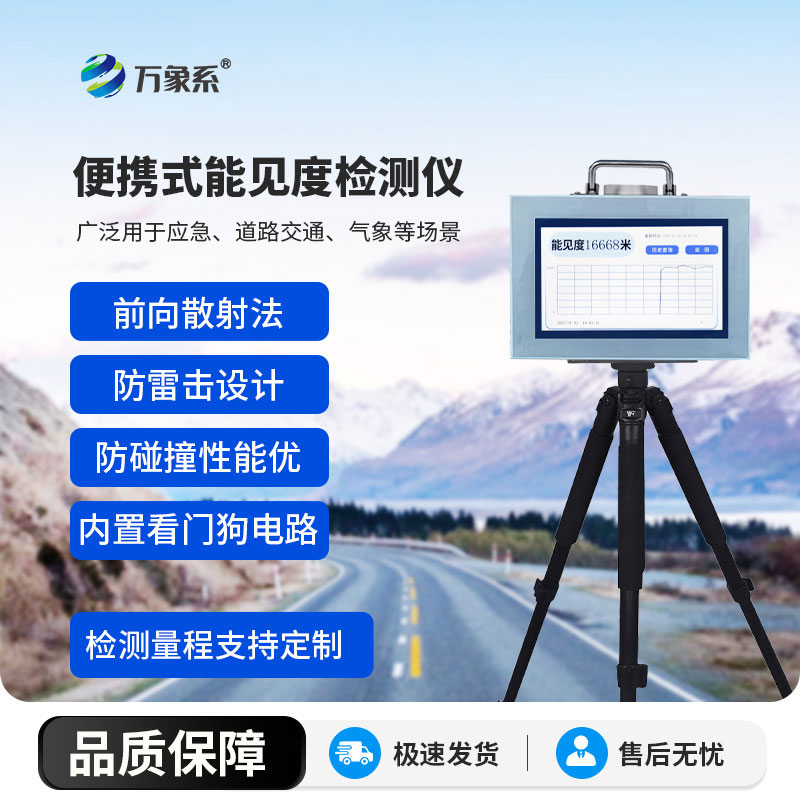
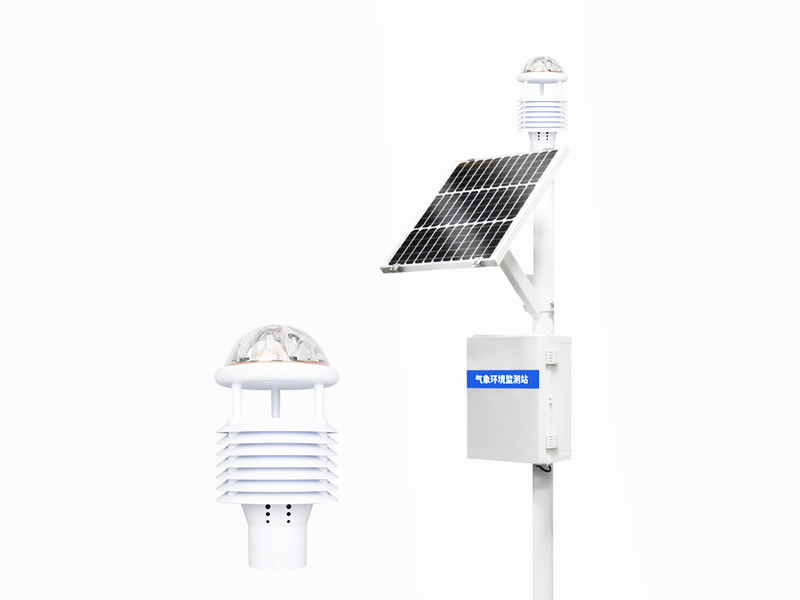
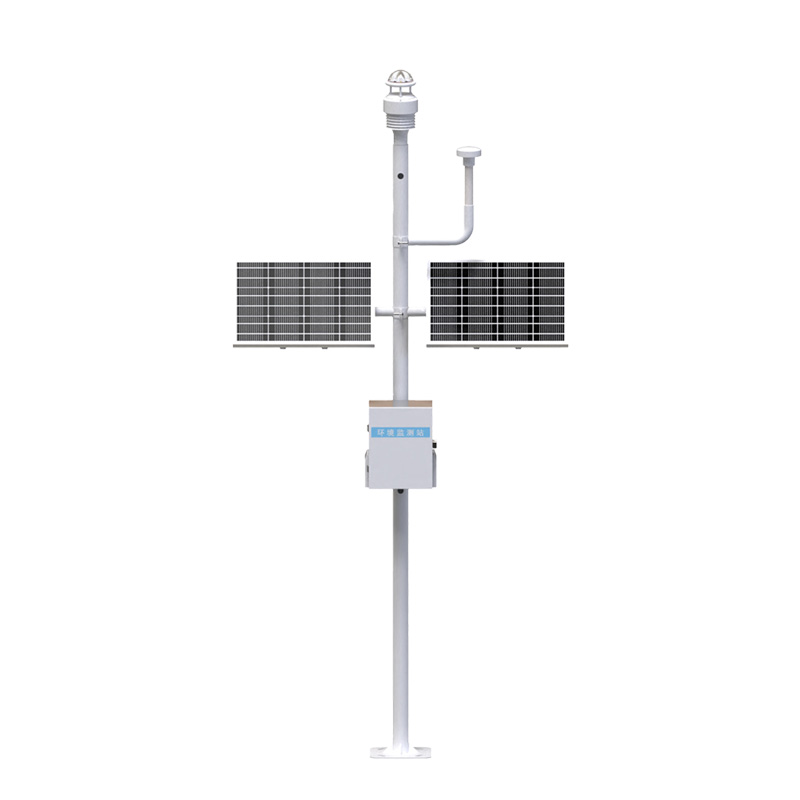
The WX-BN10 portable visibility monitor is a precise monitoring device specifically designed for outdoor scenarios. It can quickly capture environmental visibility data and provide scientific guidance for traffic travel, outdoor operations, and emergency rescue. It breaks the limitations of traditional fixed visibility monitoring equipment, which are limited by location and inconvenient to move. With its compact, lightweight, easy-to-operate, and fast-response characteristics, it adapts to various complex outdoor scenarios, freeing visibility monitoring from the constraints of location and becoming a practical tool for safeguarding outdoor safety.
The most distinctive advantage of the WX-BN10 portable visibility monitor is its ultimate portability, fully adapting to mobile monitoring needs. The compact and lightweight design of the body, weighing typically only a few kilograms, allows it to be easily carried in a backpack or handheld, without the need for professional tools for transportation. Compared to the cumbersome installation and debugging process of large fixed monitoring equipment, it can be quickly put into use after a self-check upon startup. Whether it's on the side of the road, in mountainous areas, or in temporary control zones at ports and airports, it can be flexibly deployed, greatly enhancing the mobility of monitoring.
Its core competitiveness lies in its precise and rapid monitoring capability, which can meet the needs of multiple scenarios. Relying on optical detection technology, it accurately measures the scattering degree of light in the air by emitting and receiving light signals, and then converts it into visibility data. The entire monitoring process takes only tens of seconds, with data errors controlled within a reasonable range. Even in complex environments with low visibility such as fog, haze, rain, and snow, it can stably output precise data, providing reliable support for on-site decision-making.
Overall, portable visibility monitors, with their advantages of portability, flexibility, precision, efficiency, and ease of operation, have filled the gap in outdoor mobile visibility monitoring. They have enabled visibility monitoring to move from fixed points to full-area coverage and extend from professional scenarios to daily outdoor needs. They not only provide scientific visual data support for various outdoor tasks but also strengthen the safety line for personnel and operations, becoming an important equipment in the outdoor safety guarantee system.
Article address:
http://www.qxhjjc.com/en/newcen/1831.html








 Home
Home phone
phone Product Overview
 Contact Us