Mountain slopes, road slopes, mine slopes, and dam slopes are key objects of control in the field geological disaster prevention. The stability of slope structures is directly related to the safety of surrounding road traffic, engineering construction, residential areas, and the ecological environment. Natural slopes are long-term affected rainwater infiltration, wind erosion, and changes in geological stress, while artificial engineering slopes are disturbed by construction activities, vehicle vibrations, and seasonal temperature differences. These factors easily cause hidden hazards as slow displacement, soil loosening, and structural deformation. Such minute deformations are difficult to identify with the naked eye, but once they accumulate to a certain extent, they can trigger geological disasters like, collapses, and slumps. These disasters are highly sudden and destructive, often causing irreversible losses. Traditional slope management mainly relies on regular manual inspections and visual observations to identify hazards. approach not only has a long inspection cycle and high labor costs but also fails to capture subtle deformation changes around the clock. Problems can only be discovered after obvious cracks or collapses appear on slope, resulting in significant regulatory lag. The widespread application of the WX-WY1 slope GNSS displacement monitoring station has completely revolutionized the traditional extensive slope management model. It achieves-weather, fully automatic, and high-precision dynamic monitoring of slope deformation, providing reliable technological support for early warning of geological disasters and normalized control of slope safety.
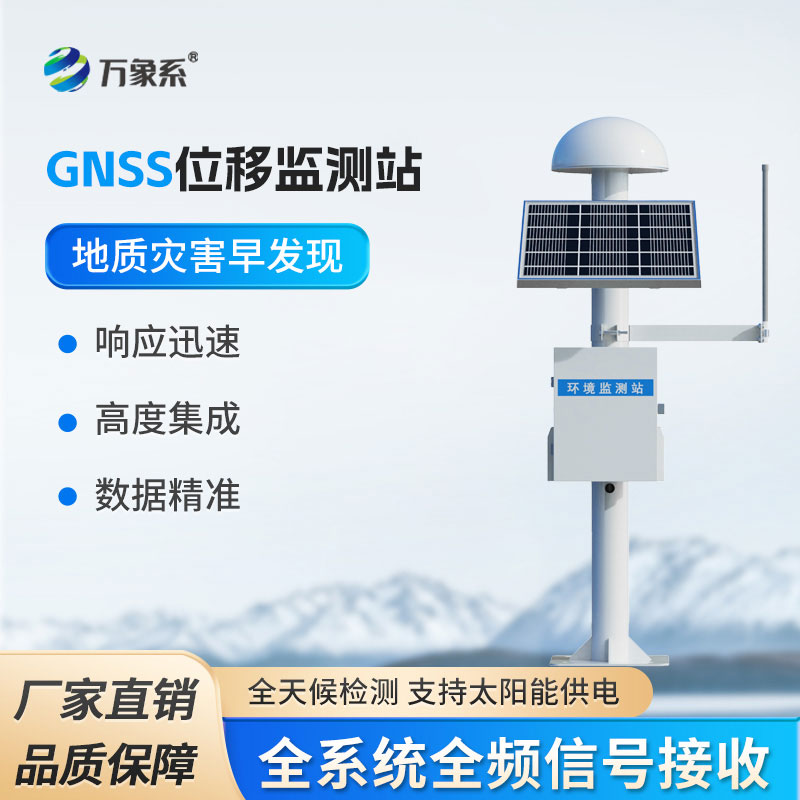
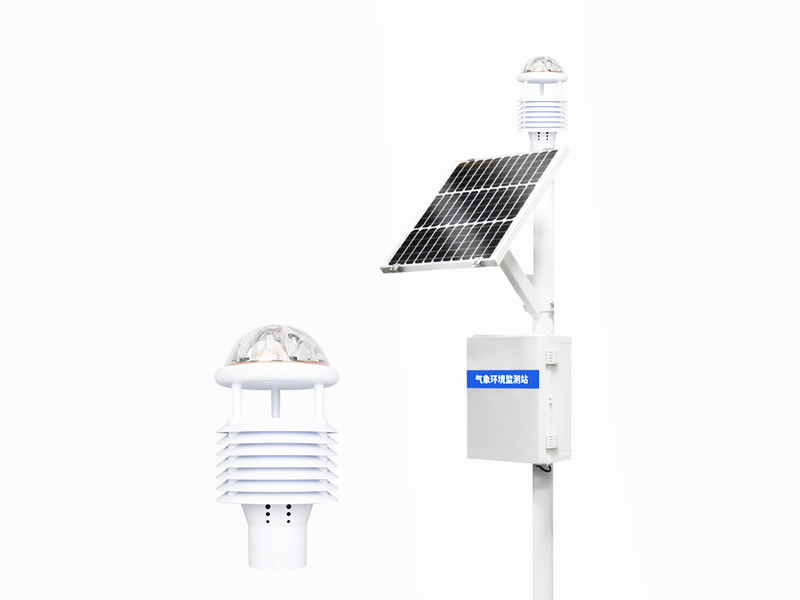
The W-WY1 slope GNSS displacement monitoring station is an intelligent monitoring device specifically designed for the safety prevention and control of geological slopes, and it is also a core facility in the current geology and slope disaster early warning system. Relying on mature satellite positioning sensing technology, the device breaks through the limitations of traditional manual monitoring and local point measurements. It can capture allround displacement changes of slopes over the long term, continuously and automatically, accurately identifying invisible changes such as weak settlement, horizontal displacement, and slow sliding of slopes. Unlike ordinary monitoring devices that are affected by terrain shading, weather interference, and environmental factors, the slope GNSS displacement monitoring station possesses extremely strong environmental adaptability. It requires no on-site manual attendance and can autonomously data collection, analysis, and transmission around the clock, truly restoring the real-time stability status of the slope. By continuously tracking the dynamic changes of the slope, it makes hidden and progressive hazards visible and data-driven, enabling the transformation of slope safety management from passive handling to active early warning and advance prevention.
The slope GNSS displacement monitoring station is compatible the vast majority of slope monitoring scenarios and has extremely high versatility, making it a universal intelligent device for engineering operation and maintenance and geological disaster prevention. Whether it is traffic slopes along highways railways, open-pit slopes formed by mine mining, natural mountain slopes in mountainous areas, or reservoir dam and foundation pit engineering slopes, all can achieve normalized safety monitoring through this device In daily management, through long-term continuous data accumulation, staff can clearly grasp the deformation patterns of slopes under different seasons and weather conditions, accurately distinguish between normal and dangerous displacements, effectively avoid the problems of blind treatment and excessive operation and maintenance. During critical periods such as flood seasons and extreme weather, the system can track slope changes in real time and promptly push abnormal warning information, assisting management departments in accurately implementing prevention and control measures, thereby significantly improving the scientific nature and precision of slope safety governance。
Article address:
http://www.qxhjjc.com/en/newcen/1891.html






 Home
Home phone
phone Product Overview
 Contact Us